Why Enterprising Families Need a Code of Conduct
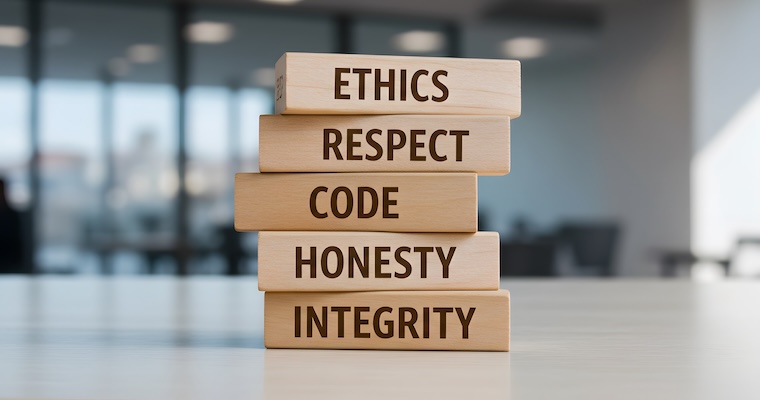
As Prince Andrew showed, one person’s behavior can become everyone's problem. Families must set expectations, outline processes, and provide clarity before emotions take over.
In late 2025, King Charles III took the extraordinary step of stripping his brother Andrew of the title “Prince,” removing his remaining military honors and patronages, and requiring him to leave his longtime residence. These actions followed years of reputational harm tied to Andrew’s association with Jeffrey Epstein and a civil lawsuit that, though settled, continues to shape public perception.
The Royal Family—often described as “the Firm”—functions in many ways like a family enterprise. And the episode demonstrated something familiar to every family whose identity is intertwined with its business: When the conduct of one person threatens the reputation of the enterprise, the institution may be forced to act to protect itself.
Most family companies will never face this degree of scrutiny. But the underlying dynamic is universal. When a family name is tied to a business, individual behavior inevitably reflects on the enterprise, on employees, and on community relationships. Families often ask how they can uphold their values and address concerning behavior without damaging relationships. In my work with enterprising families, one of the most effective tools for answering that question is a family code of conduct—a document that sets expectations, outlines processes, and provides clarity before emotions take over. As I often remind families, the goal is simple: Establish policies before it becomes personal.
Real-Life Examples of Misconduct and its Consequences
Besides the Royal Family, several widely discussed public examples illustrate how misconduct by one family member can have far-reaching effects.
The Red Bull Heir: Public Backlash and Boycott Threats
In 2012, Vorayuth “Boss” Yoovidhya—an heir to the Red Bull fortune—was involved in a fatal hit-and-run in Bangkok. His prolonged avoidance of prosecution sparked national and international criticism and led to boycott calls in several markets. Although Red Bull’s global business remained strong, the Yoovidhya name became associated with controversy, demonstrating how a single incident can reshape public perception.
Samsung: Scrutiny at the Top of a Family-Controlled Conglomerate
Samsung’s heir and de facto leader, Jay Y. Lee, spent years entangled in bribery and corruption investigations tied to South Korea’s former president. While the company continued to perform well, the legal battles raised governance concerns, influenced investor sentiment, and highlighted how conduct at the top can unsettle even the most sophisticated enterprises.
Hilton Family: a Legacy Overshadowed by Public Behavior
Conrad Hilton III, the grandson of Conrad Hilton, the hotel chain founder, drew global media attention with repeated arrests and erratic behavior. Although the Hilton family no longer manages the hotel chain, the name remains widely recognized. Negative headlines involving family members cast a shadow over a multigenerational legacy and show how enduring family identities can be affected by personal conduct.
These examples differ in scale and context but share a common truth: Family reputation is a collective asset, and it can be affected by the behavior of any individual who carries the name.
Why Employees Watch – and Why It Matters
Inside a family enterprise, employees pay close attention to how family members behave and how leadership responds. When they see a family member engage in actions that would not be tolerated from anyone else—public intoxication, disregard for safety rules, disrespect toward staff—and those actions go unaddressed, morale declines and trust erodes. Employees begin to question whether accountability truly exists.
This internal impact can be as damaging as any public embarrassment. A code of conduct helps prevent this erosion by making clear that behavioral expectations apply to everyone, especially the family. For employees, that clarity signals fairness, consistency, and respect.
What a Family Code of Conduct Provides
A code of conduct is not simply a list of dos and don’ts. It is a governance mechanism that supports clarity, accountability, and alignment across generations. A strong code:
- Translates values into behavior, turning principles like integrity, respect, and responsibility into specific expectations.
- Clarifies what the family stands for and what conduct does not align with those values.
- Provides a fair, consistent process for addressing concerns, reducing reactive or emotional responses.
- Protects nonfamily employees, who benefit when expectations apply equally to all.
- Supports rising-generation members, who often welcome structure and appreciate having guardrails in socially or professionally complex situations.
- Strengthens governance by embedding expectations into how the family leads rather than leaving them unspoken.
Some families require adult members or all owners to sign the code as a formal commitment. Others treat it as shared guidelines. In both cases, it becomes an important governance tool that reinforces alignment and accountability.
What Belongs in a Strong Code of Conduct
While every family’s document is tailored to its needs, effective codes tend to address several core areas:
Values and purpose - A concise statement outlining the family’s guiding principles and aspirations for responsible ownership and leadership.
Personal conduct expectations - Standards around professionalism, responsible behavior at business and public events, and clear rules regarding alcohol, illegal substances, and safety—especially in operational businesses.
Treatment of employees and partners - Expectations for respectful engagement with people at all levels, reinforcing a culture of dignity and courtesy.
Confidentiality and information protection - Guidelines for safeguarding sensitive business and family information, often supported by non-disclosure provisions.
Conflicts of interest - Rules for disclosure, recusal, and avoiding the use of family influence for personal gain.
Social media and public communication - Guidance on what should not be shared publicly, such as confidential business information, inflammatory political commentary, visible public intoxication, or displays of wealth inconsistent with the family’s values.
Internal dispute processes - Clear guidance on where concerns are raised (e.g., specific governance body), how they are reviewed, who is involved in decisions, and what steps occur before disputes escalate. Some families specify that internal processes must be exhausted before legal action is considered.
Consequences and adjudication - A code must articulate how the family will respond to violations. Possible consequences include warnings, corrective action, changes to employment or leadership roles, temporary suspension of privileges, or—in rare cases—limits on governance rights or ownership eligibility. The purpose is to ensure fairness, consistency, and protection of the enterprise.
How Families Create Codes That Work
Families that succeed with codes of conduct typically follow a few shared practices:
- They start with values, not a list of complaints.
- They involve multiple generations to ensure shared ownership.
- They aim for clarity, balancing specificity with flexibility.
- They adopt the code before it is needed, so enforcement feels principled rather than targeted.
- They revisit the code periodically to keep it aligned with the family’s evolution and the business’s needs.
This process not only produces a document but also strengthens communication, alignment, and shared purpose.
Guardrails for Legacy and Leadership
Few families will face situations as dramatic as the Royal Family’s. But every enterprising family will eventually encounter questions about behavior, accountability, and fairness. A well-crafted code of conduct provides the guardrails needed to navigate those moments with clarity. It protects the enterprise, supports employees, and ensures that a single individual’s behavior never jeopardizes the reputation or legacy the family has worked so hard to build.