What Patagonia, Ben & Jerry's, and The Body Shop Teach About Protecting a Company's Mission
Three iconic companies show why you need more than good intentions, certifications, or promises from buyers.
A founder can build a company around a powerful mission, but what happens to that mission when investors arrive, ownership changes, or the founder steps away? Ben & Jerry’s, The Body Shop, and Patagonia have taken different approaches to protecting their values, with revealing results. For entrepreneurs, the central question is not just how to articulate a mission, but also how to give it staying power.
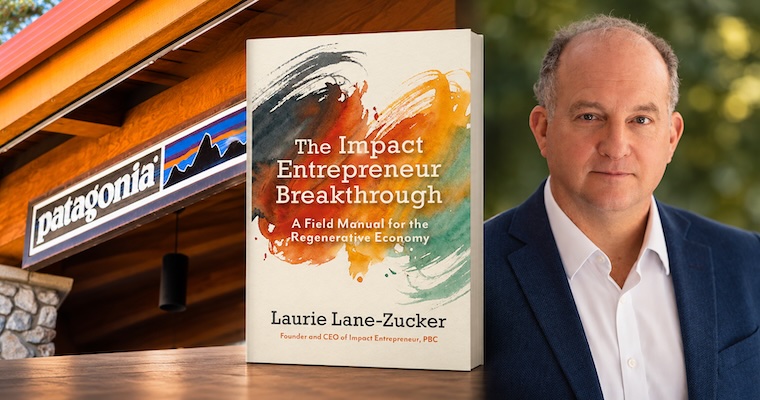
EIX Senior Editor Shinwon Noh spoke on this topic with Laurie Lane-Zucker, the founder and CEO of Impact Entrepreneur, a global media platform and professional network for the impact economy with more than 70,000 members in over 200 countries. He is also the author of The Impact Entrepreneur Breakthrough: A Field Manual for the Regenerative Economy (Berrett-Koehler, 2026).
Choosing the Right Mission Protections
EIX: Founders can protect their missions through B Corp certification, benefit corporation status, contracts, or ownership structures such as purpose trusts. How do these options differ, and how should entrepreneurs choose among them?
B Corp certification is a third-party assessment of how a company behaves. The nonprofit B Lab runs it, and over 10,000 companies hold it. It earns trust from employees and customers, and it cannot bind whoever owns the company next. Benefit corporation status is a legal form, and it changes what directors owe. In Delaware, the board of a public benefit corporation must balance shareholders’ financial interests with the interests of people the company affects and the public benefit named in its charter. Contracts, like the agreement Ben & Jerry’s signed with Unilever in 2000, can promise a great deal, but they are only worth what someone can enforce. Alternative ownership structures, including purpose trusts, steward ownership, foundation ownership, employee ownership and cooperatives, change who holds the votes.
To choose the right structure, start with the danger you most need to guard against and the stage your company has reached. Different ownership structures fit different contexts. Purpose trusts suit large enterprises where founders want mission permanence beyond their lifetime, and steward ownership serves mission-driven enterprises needing patient capital and protection from acquisition. Most durable companies layer several. Patagonia was certified as a B Corp in 2011, became California’s first benefit corporation in January 2012 and moved its voting stock into a trust a decade later.
When Mission Protection Meets Investor Expectations
EIX: Protecting a mission can limit what future investors or owners can do. How should founders weigh that trade-off? Can stronger protections make it harder for a company to succeed?
Mission protection changes which money fits. Most venture models run on money that has to come home by a fixed timeline. A company that can never be sold, or whose control sits beyond investors’ reach, will not suit that money, and founders should know that before they lock anything. Other money does fit: revenue-based financing, family offices with multigenerational mandates, foundation program-related investments, community shares and bonds, and some impact funds built to hold for longer.
And yes, a protection can be too strong. A capital-hungry business, in hardware or life sciences, say, may need equity on terms a hard lock forbids. A struggling company may find that the only buyer able to rescue it will not accept the restrictions, and the mission survives on paper while the business folds. Founders also learn better ways to serve a purpose over time, and a rigid lock can freeze one generation’s strategy along with its values. My advice is to lock what must last, the purpose and who may change it, and leave strategy and financing free to move.
What Ben & Jerry’s and The Body Shop Teach Us
EIX: Ben & Jerry’s negotiated an independent board to protect its mission when Unilever acquired it, while The Body Shop pursued B Corp certification. Yet both faced challenges. What do these cases reveal about the limits of mission protection, and what can go wrong years after a deal?
Two lessons stand out. A protection is only as strong as someone’s power to enforce it, and the world around a protection keeps moving after the ink dries.
Ben & Jerry’s 2000 agreement with Unilever created an independent board with primary responsibility for the company’s social mission. In 2024 that board sued, and its complaint accused the parent of silencing the brand’s social activism. Then Unilever separated its ice cream business into a new company, The Magnum Ice Cream Company. The last independent directors left on January 1, 2026, and in March the Ben & Jerry’s Foundation joined the suit. The case was thrown out because the judge read the agreement as giving those directors no right to sue on the company’s behalf. In short, the directors had responsibility for the mission but no clear way to defend it in court.
The Body Shop became a certified B Corp in 2019, while Natura owned it. In late 2023 it was sold to a private equity firm, and within weeks its UK business was in administration. The certification described how the company behaved and had no say in who bought it.
Founders rarely anticipate the afterlife of the deal. The buyer gets bought or spins you off. The executives who shook your hand retire, and their successors read the clauses narrowly. A bad year makes mission spending look like a cost line.
Why Patagonia Changed Who Holds the Votes
EIX: Patagonia transferred ownership to a purpose trust and a nonprofit. How is that fundamentally different from the approaches used by Ben & Jerry’s or The Body Shop? Who makes key decisions, and what risks remain?
The difference lies in where the votes sit. Ben & Jerry’s and The Body Shop asked conventional owners to keep faith with a mission. Patagonia handed its votes to an entity whose only job is the mission. In September 2022 every voting share, 2 percent of the company, went to the Patagonia Purpose Trust, which Patagonia says “was created solely to protect our company’s values and mission.” The nonvoting 98 percent went to a nonprofit, the Holdfast Collective, which receives the profits Patagonia does not reinvest. Yvon Chouinard put it this way: “Instead of ‘going public,’ you could say we’re ‘going purpose.’”
Decision rights follow the votes. The board and the chief executive still run the business. The trust approves board members and any change to the company’s charter, so a change of purpose or control has to pass through it. Even the company’s longstanding pledge of 1 percent of sales now sits in the charter, beyond the reach of a cost-cutting quarter. Ownership is about power: who gets to decide how resources are used, who benefits from their use, and who bears the costs. Patagonia’s structure puts its answers to the first two questions in writing. However, the structure dates only from 2022. Its hardest test, the first full change of stewards, lies ahead.
Before You Sign an Acquisition Deal
EIX: Imagine a mission-driven founder considering an acquisition offer. What should they do before signing, what should they ask the buyer, and what protections should they negotiate?
Start before any buyer arrives, by writing down what must survive a sale and what you would walk away over. A founder who skips that step ends up negotiating the mission clause by clause against people who do deals for a living.
Then investigate the buyer as carefully as they investigate you. Call founders whose companies they acquired five or 10 years ago and ask what happened after the earn-out ended. Ask the buyer directly who will make decisions about the mission after closing, what happens to the protections if they sell you, spin you off or are acquired themselves, and who will be able to enforce those protections.
After the Ben & Jerry’s ruling, that last question deserves the hardest bargaining. Whatever you win, whether an independent board or the right to block a change of purpose, the agreement should say in plain words who may sue to enforce it and what remedy they can seek. Plan, too, for the cost of that fight. The protections should bind any future owner, including a spun-off company or a later buyer. Some founders also place guardians and money outside the company before closing, in a foundation or a trust with its own funds, so the mission does not depend on the new parent’s goodwill.
Finally, consider alternatives. A sale to your employees, or a transfer to a trust, may pay you less at closing and keep far more of what you built. With experienced legal and tax counsel beside you, those options belong on the table before you sign a letter of intent.
Building a Mission That Outlasts the Founder
EIX: Even without an acquisition, founders eventually step away. How can they design a company whose mission survives changes in leadership, investors, employees, and customers? Which decisions need to be made early?
Founders tend to blur two questions: who will lead the company and who will control it. A successor can be chosen late. Control has to be designed early, because each round of outside money adds rights that someone will one day use.
My book’s own checklist asks founders to test five layers: legal structure (benefit corporation, cooperative, trust), governance (stakeholder voice, mission-lock provisions), capital (patient, aligned investors with limited exit rights), culture (strong enough to resist drift), and succession (plan for leadership transition). Then it asks, “What would happen if you were acquired by a conventional corporation?” If the true answer is “it depends on who is in charge that year,” the mission is resting on personalities.
The early decisions are concrete. Write the purpose into the charter, and adopt benefit corporation status if your state offers it. Decide who must consent before that purpose can change, and give that right to a party whose only interest is the mission, such as a foundation holding a golden share or, in time, a trust. Choose investors whose timelines will not force a sale. And decide who should own the company after you. King Arthur Baking began moving to employee ownership in 1996 and was wholly employee-owned by 2004. Bob’s Red Mill’s employee stock plan took a third of the company in 2010 and all of it by 2020. In both, ownership answered the succession question before a crisis could.
What Smaller Businesses Can Do Now
EIX: Patagonia’s ownership structure may seem out of reach for a startup or small business. Are purpose trusts or other mission-protecting arrangements realistic for smaller ventures? What simpler steps can founders take?
They are more realistic than most founders assume, because the forms scale down. Organically Grown Company, an Oregon produce distributor, has been owned by a perpetual purpose trust since 2018. Ecosia, the search engine, used a golden share in 2018 to make its founder’s pledge never to sell the company or take profits out “legally binding and irreversible.” Employee ownership already runs through thousands of American companies, and a worker cooperative can be formed by a handful of people.
Small companies also have fewer owners to persuade, so changing the charter can take a few signatures instead of a negotiation with investors who may say no.
Founders without the budget for elaborate structures might consider converting to a benefit corporation or a cooperative, adding stakeholder representation to governance, restructuring capital on mission-aligned terms and reporting transparently on impact. A 10-person company can do any of them. I would add two habits that cost almost nothing. Write the purpose, and the process for changing it, into your charter or operating agreement now. And before you take anyone’s money, ask how long they expect to hold it and what they will need in order to leave.
The more ambitious structures, purpose trusts and steward ownership among them, call for good legal and tax advice, and that advice costs least when the company is young and its documents are few.